Exposure And Conversation
Moments Of Pleasure, March 2026

“Our age is one of transition, in which the normal channels for utilizing the daimonic are denied; and such ages tend to be times when the daimonic is expressed in its most destructive form.” -Rollo May
What follows is what I really dug last month. 1
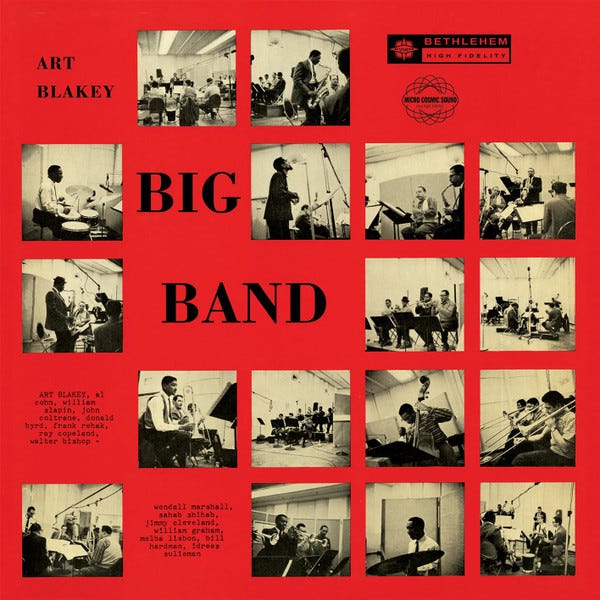
Last month I raved at length about the great Donald Byrd in my monthly recap, and have since been hipped to yet another killer sideman appearance I didn’t know about. On Art Blakey Big Band (Bethlehem Records, 1957), Byrd joins Blakey in a big band setting featuring the monster line-up of John Coltrane, Walter Bishop Jr., Al Cohn, Sahib Shihab, Wendell Marshall, Ray Copeland, Bill Hardman, Idrees Sulieman, Frank Rehak, Jimmy Cleveland, Melba Liston, Bill Graham, and Bill Slapin. One listen in and I was hooked, though the real highpoint for me are not the big band songs — which don’t get me wrong, are all fabulous — but the two Art Blakey Quintet 2 numbers that oddly fall in the middle of the track listing. Byrd really shines on these (as does Coltrane and the rest of the group), in particular on the absolutely ripping “Tippin’.” I don’t know how this record eluded me for so long, but I love that after all these years I can still discover jazz treasures like this.
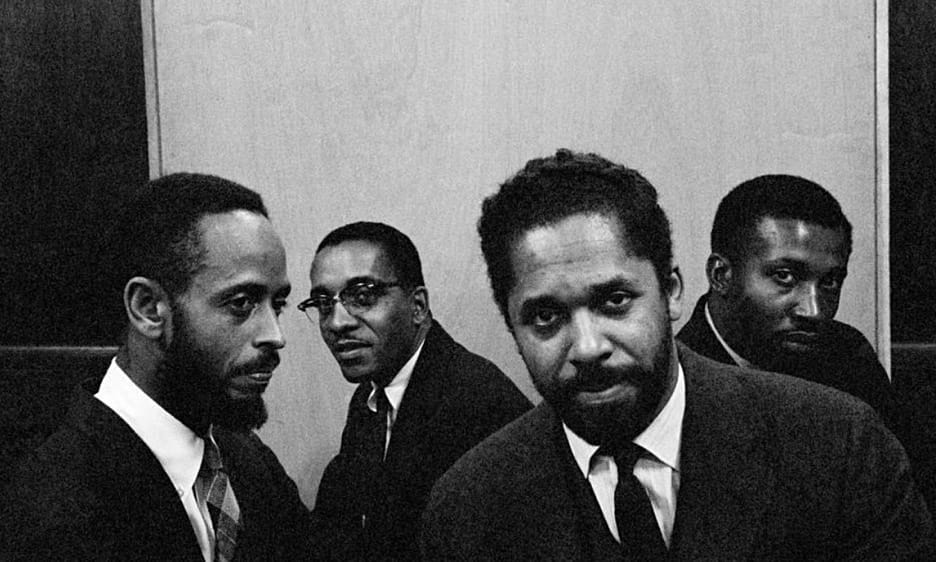
I went on a big Modern Jazz Quartet jag this month brought on by the discovery of Odds Against Tomorrow 3, an ace 1959 film noir with a great soundtrack composed by the MJQ’s John Lewis, who also conducted the 22 piece orchestra. The ensemble included his MJQ bandmates Milt Jackson, Percy Heath, and Connie Kay, as well as Bill Evans and Jim Hall (who later recorded “Skating in Central Park” from the film for their own moody classic, Undercurrents). You can hear the partial soundtrack on the United Artists release Music from Odds Against Tomorrow (reissued in 1960 as Patterns).
The MJQ albums that got the most play would be Collaboration, a magnificent 1964 live album recorded with with Brazilian guitarist Laurindo Almeida (their version of “Concerto De Aranjuez” is a gem), The Modern Jazz Quartet Plays George Gershwin’s Porgy And Bess (which features a gorgeous version of “Summertime”), and the group’s triumphant jazz-classical fusion milestone, Third Stream Music.4
I discussed my love of “Nardis” — written by Miles Davis, but owned by Bill Evans — in my first Moments Of Pleasure, a composition which has recently joined the ranks of “My Favorite Things,” “Sister Ray,” and “Dark Star” as one that I want to hear every version of…. And I just discovered another take I adore. This “Nardis” is from the excellent Another Time: The Hilversum Concert, recorded live in 1968 by the short-lived Bill Evans Trio that featured Jack DeJohnette (along with Eddie Gómez), and it’s DeJohnette that makes it for me with his monster drum break/solo. The entire concert is a knock-out — another highpoint would be the trio’s take on “Embraceable You — and as such yet another recommended addition to the ever-growing Bill Evans live discography, which us Evans obsessives will never get enough of. 5
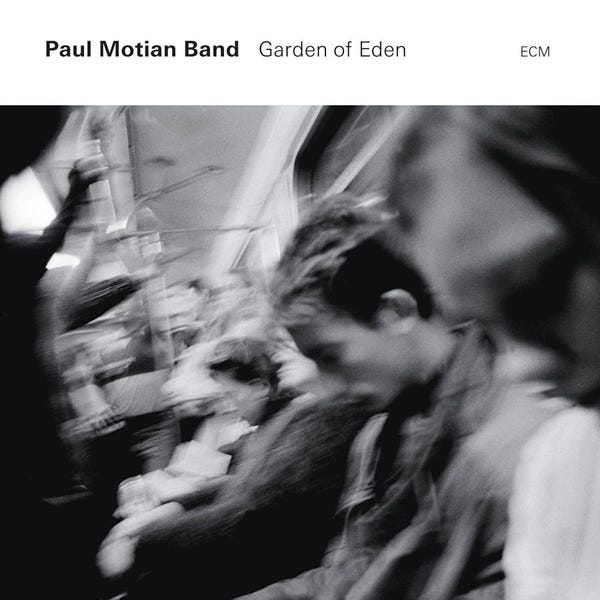
As I mentioned in a past Moments Of Pleasure, each time I would visit my mom at her place I would grab one album from my father’s collection to spend some serious quality time with. I’d always try to not just grab music or artists that I knew, and since I tend to neglect more recent jazz, I’ll often lean in there… March’s big discovery was by Paul Motian, who I really only know via his work as a sideman, not as a band leader. 2006’s Garden Of Eden is a really cool discovery, with it's hat-tips to both classic bebop and the avant garde, with an overall cinematic feel helped along by three guitar players. I gave it its first spin during a mildly successful Taco Night, and had to give it a second closer listen right as it ended, which revealed little twists and turns from an album I look forward to spending a lot more time with.
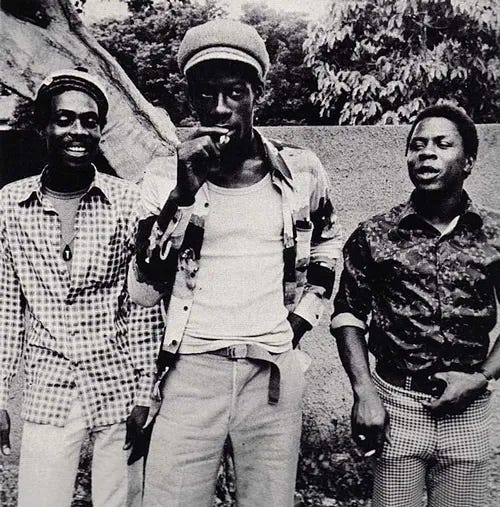
The first beautiful day after this bleak winter came in March, and in my orbit that meant the start of reggae season with a day long blast of King Tubby, Yabby You, Dennis Brown, and The Heptones.6 To me reggae has always been hopeful music, even the deep roots protest sounds are imbued with a sense of joyous expectation.
•
To Be or Not to Bop is the best new jazz-related series on Youtube. NYC trumpet player Bruce Harris has a deep knowledge and love of America’s greatest art-form that is truly contagious. Watching his excitement at a Miles or Brownie solo (that he’s likely already heard hundreds of times), is sure to bring a big smile to your face.
Reading Is Fundamental

I am loving Burt Kearns’ substack; this piece on Jerry Lewis trying to get The Catcher In The Rye made into a film (with him starring as Holden!), is a bit of a mind blower.

It’s exciting to see musicians you admire joining Substack, and even better when their writing is as great and enthusiastic as Christian McBride’s. This piece sent me into a big Sinatra kick (which is admittedly not very hard to achieve).

I am a big fan of The Neighborhoods, especially when author Rob Stephenson goes in depth with my childhood stomping grounds.

I recently devoured Bret Primack’s How John Coltrane Changed Me, which as the title indicates is a very personal book from a committed jazz fan and supporter, documenting his love of jazz and Coltrane and its impact on his day to day life. On Substack, be sure to dig Primack’s Coltrane Code, which acts as a continuation of his book, as well as Syncopated Justice which stretches out beyond Trane, like in this piece on the criminally overlooked Elmo Hope. 7
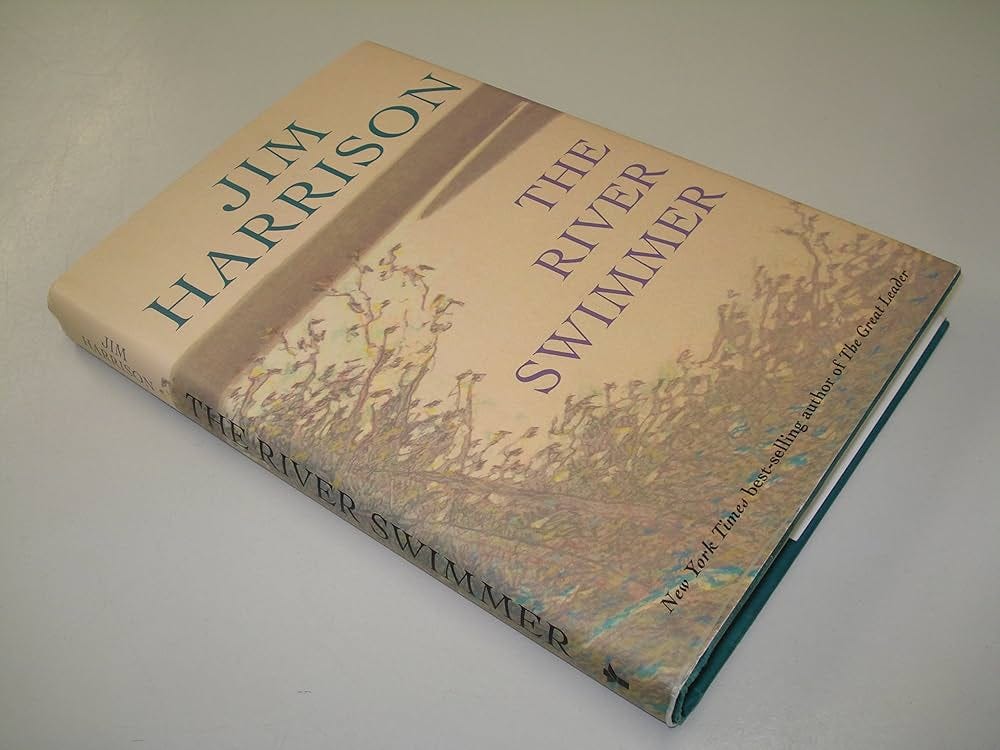
Knowing nothing about it, I picked up Jim Harrison’s The River Swimmer while doing some cleaning out of my folks’ old apartment and I could not put it down. The book is made up of two novellas, with the first (The Land of Unlikeness) feeling like it was meant to be read by me at this exact point in my life. Beautiful work by an author who I plan on exploring much deeper.
Until next time… Keep on keepin’ on!
Blakey with John Coltrane, Donald Byrd, Walter Bishop Jr., and Wendell Marshall.
Odds Against Tomorrow’s script was written by then blacklisted screenwriter and director Abraham Polonsky (under the front name John O. Killens), and starred Harry Belafonte, Robert Ryan, Shelley Winters, Ed Begley Sr., and Gloria Grahame.
The Third Stream movement, and its impact, surely deserves a book-length exploration.
Bonus “Nardis” - This live in 1975 version, found on On A Friday Evening, is knocked out of the park for me by the stunning bowed solo by Eddie Gómez… Top flight sounds!
March’s Song Of The Month.
“The real genius of the piano.” -Johnny Griffin
You always reveal so many intriguing paths to go down
Written with great soul.